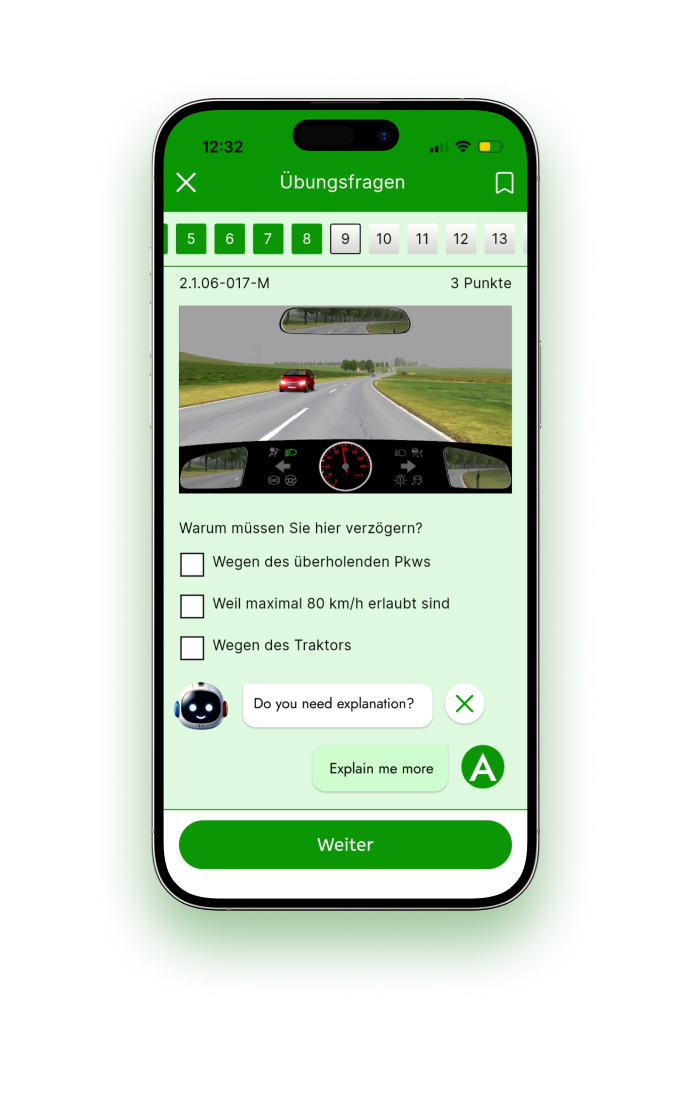
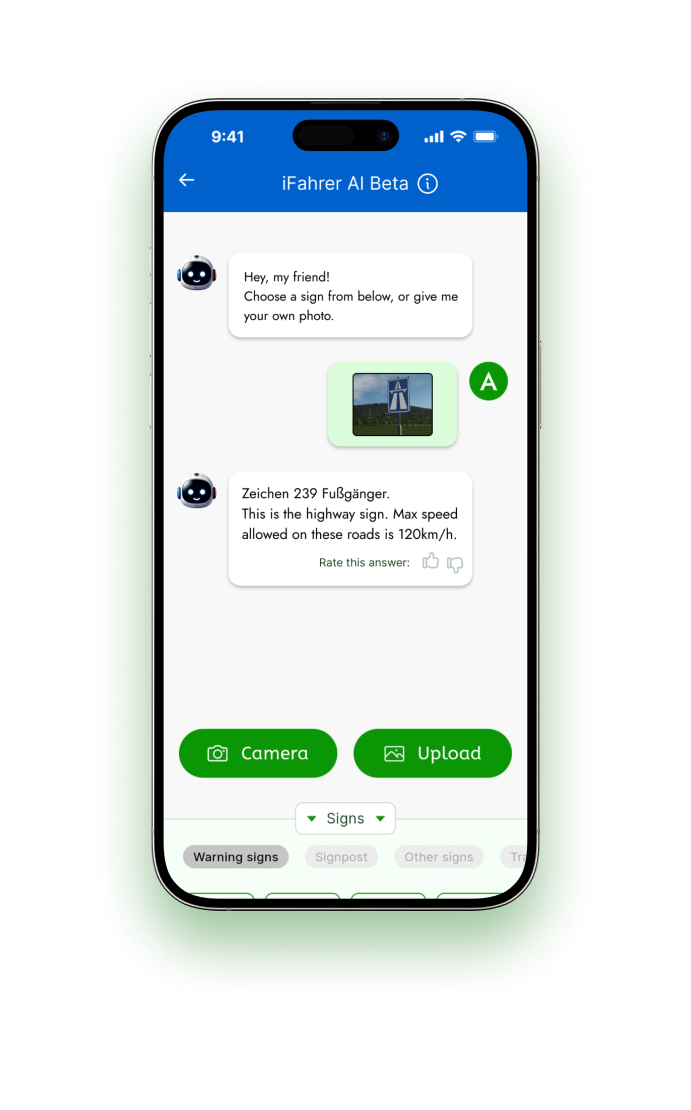
Get ready for your license test with AI assistance!
The road is icy for a short distance. What should you avoid here, if possible?
Accelerating
Braking
Steering wheel movements
Here is Our AI Assistant's Explanation
On a short icy patch you should avoid anything that suddenly changes the tire’s grip demand. Ice offers extremely little friction, so the tires can only transmit very small forces. If you ask for more than that, the wheels will either slip (loss of traction) or the car will start sliding (loss of control).
That’s why all three apply:
Accelerating: Extra throttle requires traction at the driven wheels. On ice they can spin easily, and if they regain grip suddenly the car can jerk or fishtail. The rule of thumb is: keep a steady, gentle throttle or coast through.
Braking: Braking needs grip on all wheels. On ice you can lock wheels (without ABS) or trigger ABS (with ABS), but in both cases your stopping distance becomes much longer and you may still slide. If you must slow down, do it before the icy patch and then brake as little as possible while on it.
Steering wheel movements: Turning also needs grip (lateral force). Quick or large steering inputs can exceed available friction instantly, causing understeer (car goes straight) or oversteer (rear steps out). So you should keep the steering as straight and as smooth as possible.
Practical takeaway for similar questions: before the icy section reduce speed early, then roll through with constant speed, minimal steering angle, and no sudden pedal inputs. If you have to react, do everything very gently.