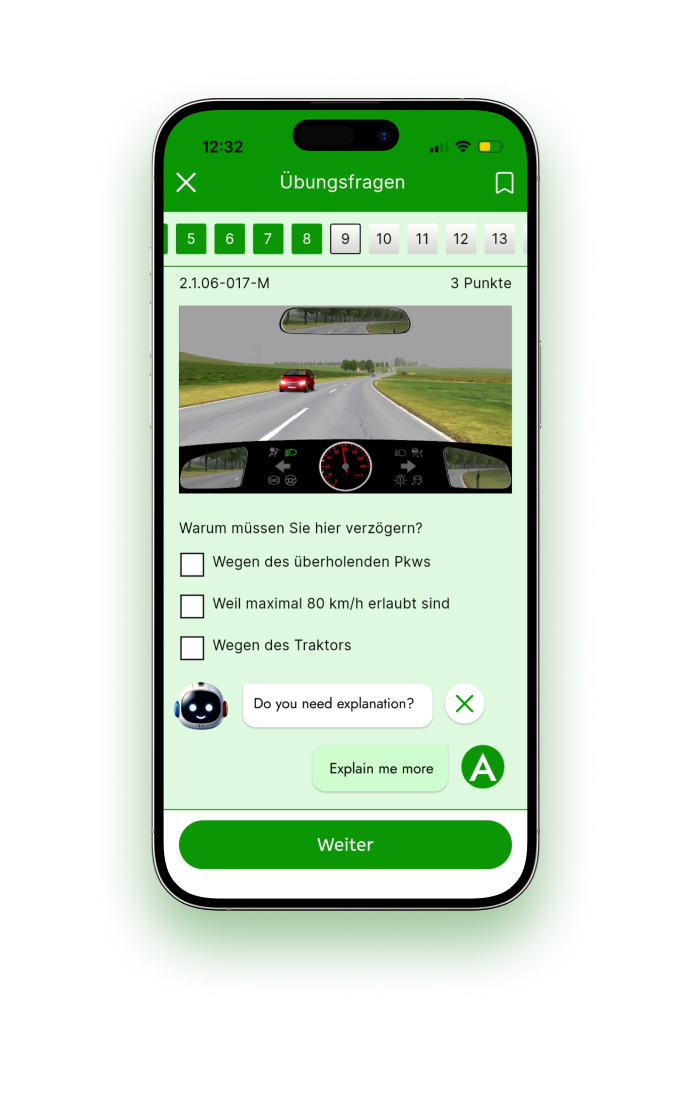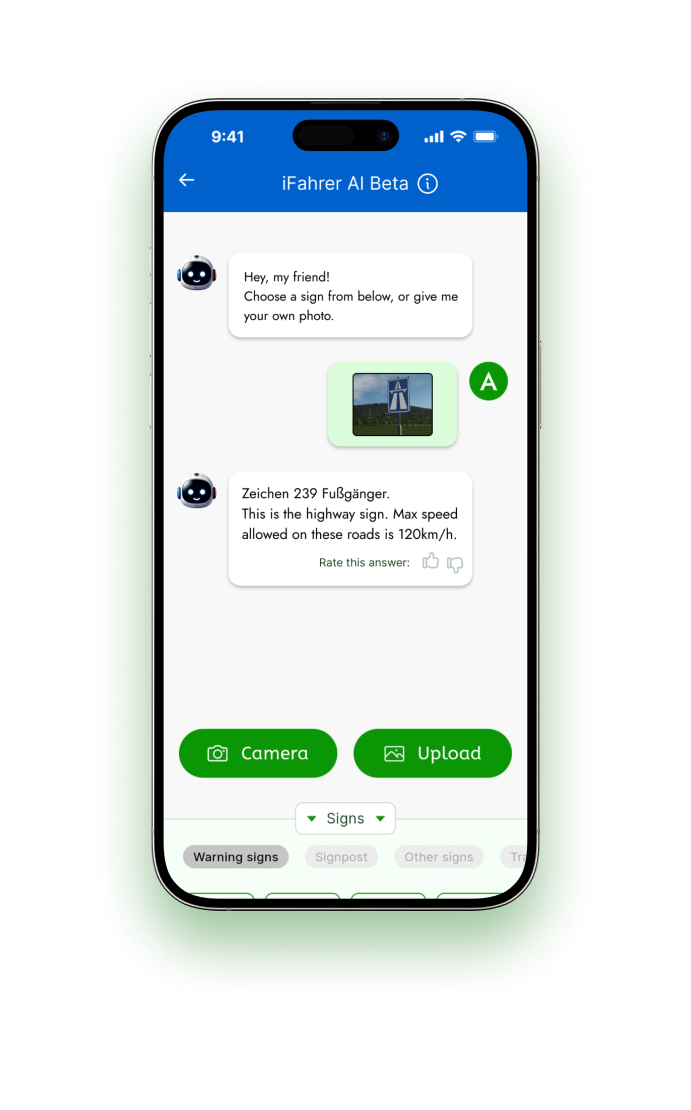
On a two-wheeler (motorcycle, moped, bicycle), you’re particularly at risk for three main reasons, and all of them often combine in real traffic.
Because you can be easily overlooked: You have a narrow silhouette, you can disappear behind car pillars (A-pillar “blind spots”), parked vehicles, hedges, or even glare from the sun. Many drivers also “look for cars” at junctions and may not register a smaller vehicle even if it’s visible. This is why intersections, cars pulling out, and lane changes are especially dangerous for two-wheelers.
Because your speed can be underestimated: With a small frontal area, other road users often judge your approach as slower or farther away than it really is. That leads to typical conflicts like someone turning left across your path, pulling out from a side road, or overtaking when there isn’t enough distance. The rule of thumb is: assume others misjudge your speed and will take smaller gaps than they should.
Because you’re at greater risk of injury in a crash: Unlike in a car, you have no protective bodywork, crumple zone, airbags, or seatbelt. Even a low-speed fall can cause serious injury, and collisions with the road surface or fixed objects are particularly dangerous. That’s why keeping safety margins (distance, speed adapted to visibility, and readiness to brake) matters much more.
For similar questions, remember the “seen, judged, protected” principle: two-wheelers are less likely to be seen, their speed is harder for others to judge, and they offer far less physical protection if something goes wrong.