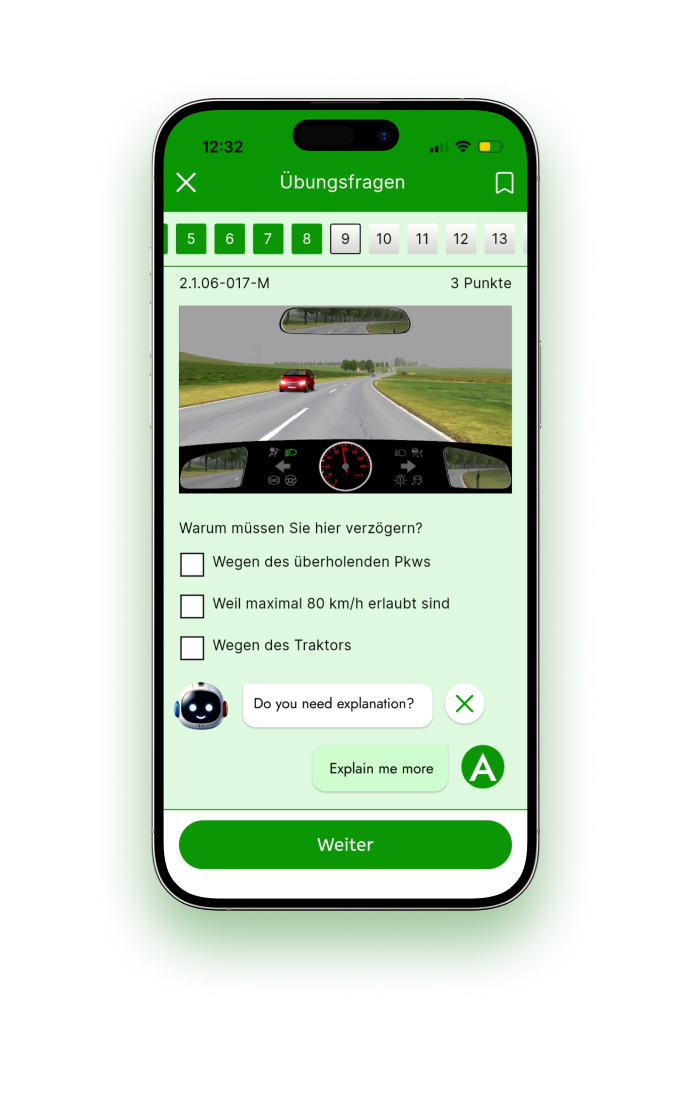
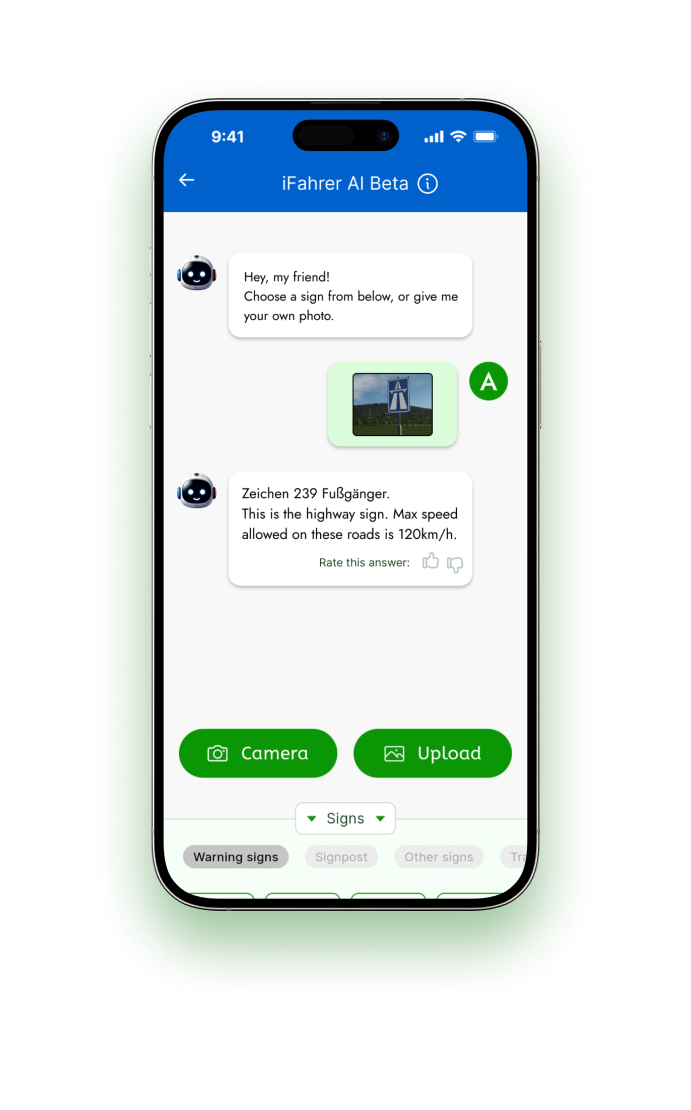
Get ready for your license test with AI assistance!
To which road users must you show particular care?
To persons with obvious disabilities
To children
To taxi drivers
Here is Our AI Assistant's Explanation
You must show particular care to people with obvious disabilities and to children because both groups can be less predictable in traffic and may need more time, space, and support to react safely.
With persons with obvious disabilities, the key rule of thumb is to expect slower movement and limited perception or mobility (for example, a person using a wheelchair, walking with a cane, or someone who appears visually or hearing impaired). In practice, that means reducing speed early, keeping a larger passing distance, avoiding pressure (no honking or close overtaking), and being ready to stop if they hesitate or need extra time at crossings or when boarding/alighting.
With children, German traffic rules treat them as especially vulnerable because they often misjudge speed and distance, may act impulsively, and can suddenly step into the road (especially near schools, playgrounds, buses, parked cars, and residential areas). So you should drive more slowly, keep your foot ready to brake, increase your following distance, and anticipate sudden movements like running into the street or cycling wobbly.
Taxi drivers are not a protected group that requires “particular care” as a general rule. You still drive considerately around everyone, of course, but the special heightened duty is aimed at vulnerable road users like children and people with disabilities (and similarly elderly or visibly frail persons).