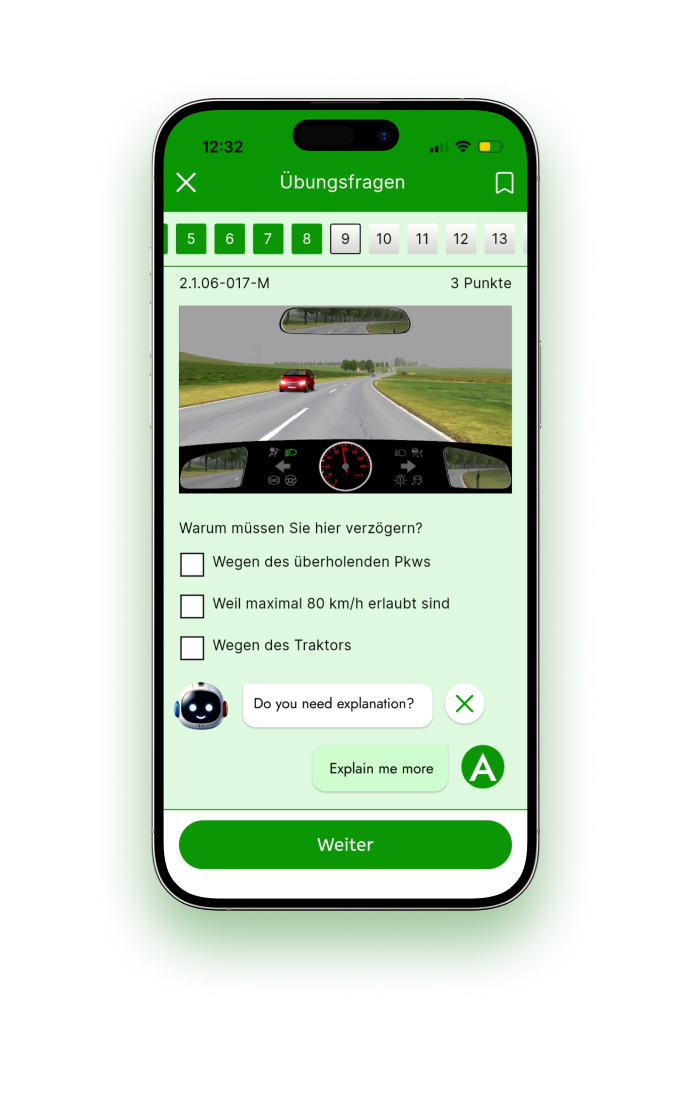
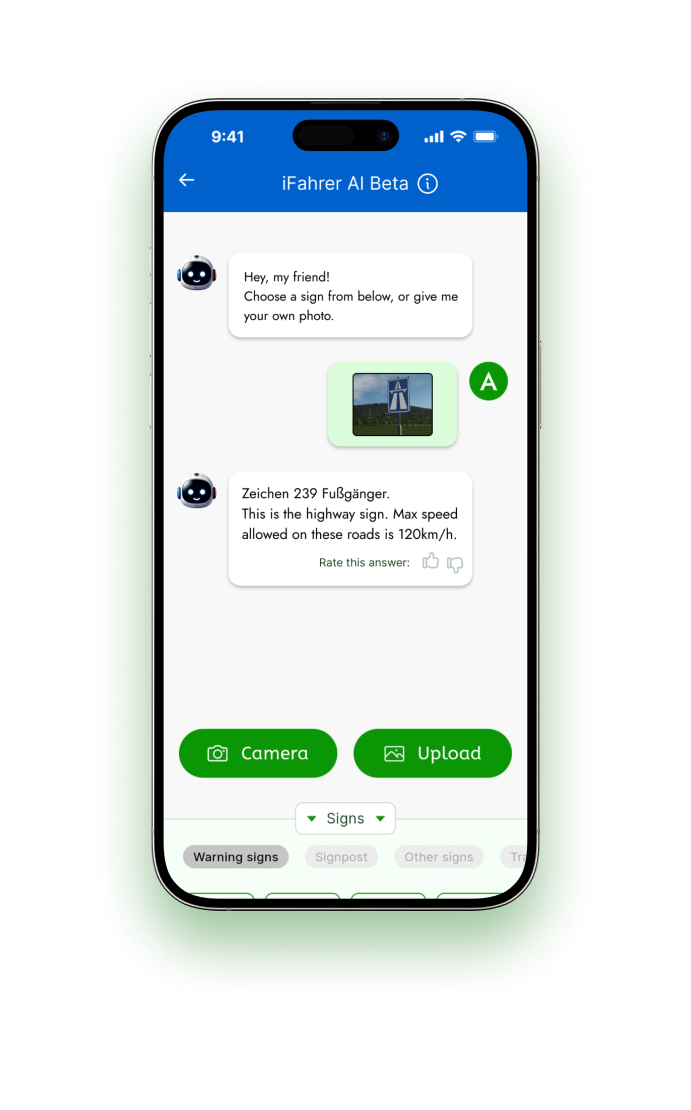
Get ready for your license test with AI assistance!
How is it possible to prevent oncoming traffic being dazzled by the dipped headlights?
The headlight range can be adjusted depending on the load carried by the vehicle
Only permissible light bulbs may be used in each of the headlights
The headlight setting should be checked after every repair
Here is Our AI Assistant's Explanation
You were right to choose 1, 2, and 3, because preventing dazzling is mainly about keeping the beam pattern correct and aimed low enough in real driving conditions.
Answer 1 is correct because the dipped-beam cutoff is only safe if the headlights are aimed properly. When you load the rear of the car (passengers, luggage, trailer nose weight), the front lifts slightly and the headlights point higher, which can shine into oncoming drivers’ eyes. Using the headlight range adjustment (manual wheel or automatic leveling) compensates for this by lowering the beam to the correct angle.
Answer 2 is correct because headlights are type-approved as a system (housing, reflector/lens, and bulb). Using the wrong bulb type or an unapproved bulb can change brightness, focal point, and beam shape, which often destroys the sharp dipped-beam cutoff and causes glare even if the lights seem “bright and good.” In Germany you must use only the permitted bulb type for that headlight.
Answer 3 is correct because repairs can shift alignment or alter components (e.g., after bodywork, suspension work, replacing headlight units, changing bulbs incorrectly, or accident repairs). If the headlight aim is too high, dipped beams will dazzle. That’s why checking and adjusting headlight settings after repairs is an important rule of thumb.
A good general rule: any time the car’s load changes significantly or work is done that could affect the front height or the headlight unit, make sure the dipped beams are correctly leveled and aligned to keep the cutoff below oncoming eye level.