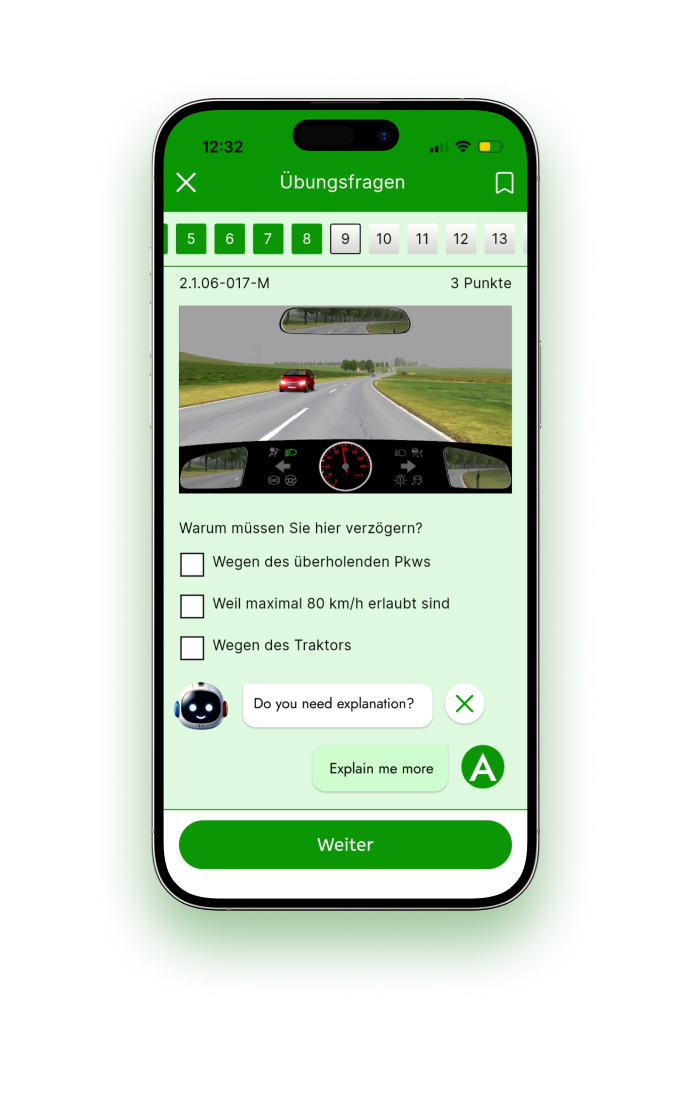
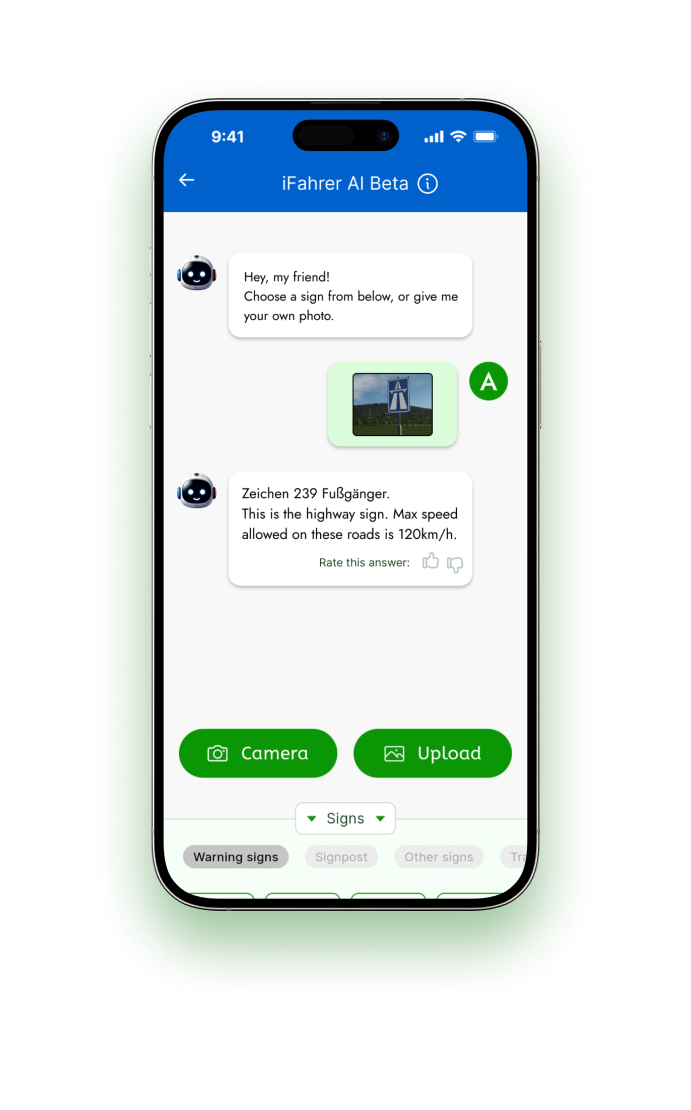
Get ready for your license test with AI assistance!
What happens as a result of tyre pressures being well below the recommended levels?
Fuel consumption increases
Tyre wear increases
Pollutant emission decreases
Here is Our AI Assistant's Explanation
When tyre pressure is well below the recommended level, the tyre deforms more and the contact patch becomes larger. That increases rolling resistance, meaning the engine has to work harder just to keep the car moving. As a result, fuel consumption goes up (answer 1).
At the same time, the extra flexing and heat build-up in the underinflated tyre cause faster and often uneven wear, typically more on the outer shoulders of the tread. That shortens tyre life and can also worsen handling and braking, especially in corners or during emergency manoeuvres (answer 2).
Answer 3 is not correct because underinflation does not reduce emissions. Since the car burns more fuel, emissions generally increase (for example CO₂), and the hotter, more stressed tyre can also raise safety risks like tyre damage or a blowout on long, fast drives.
Rule of thumb for similar questions: too little pressure means higher rolling resistance and heat, so it costs fuel and tyres (and usually increases pollution rather than reducing it).