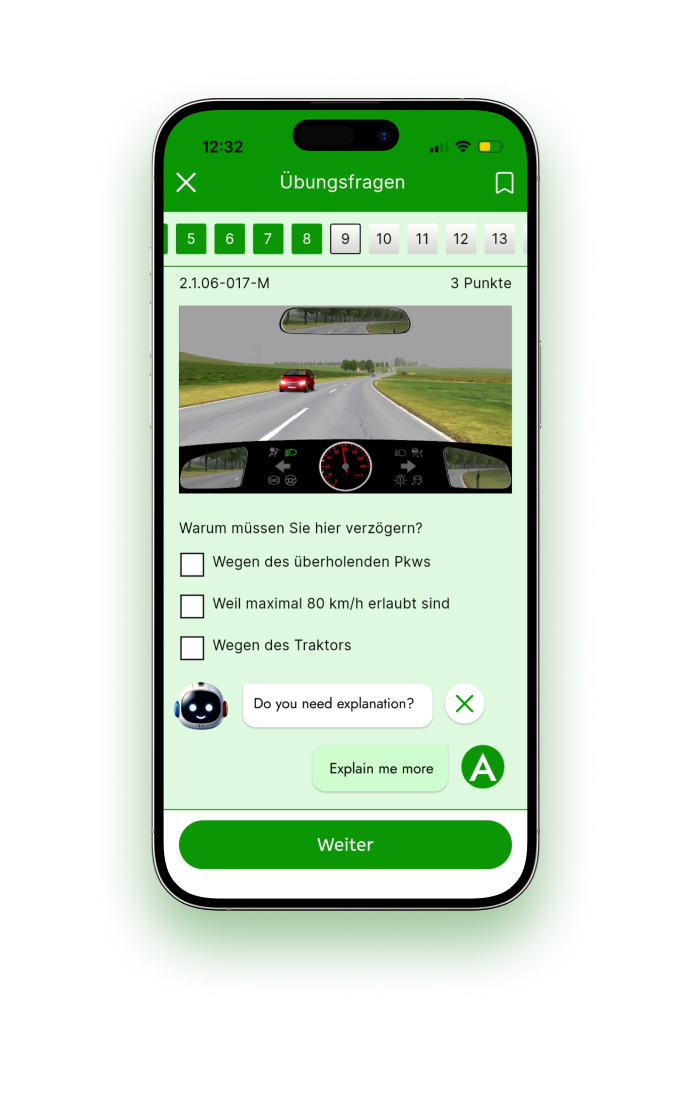
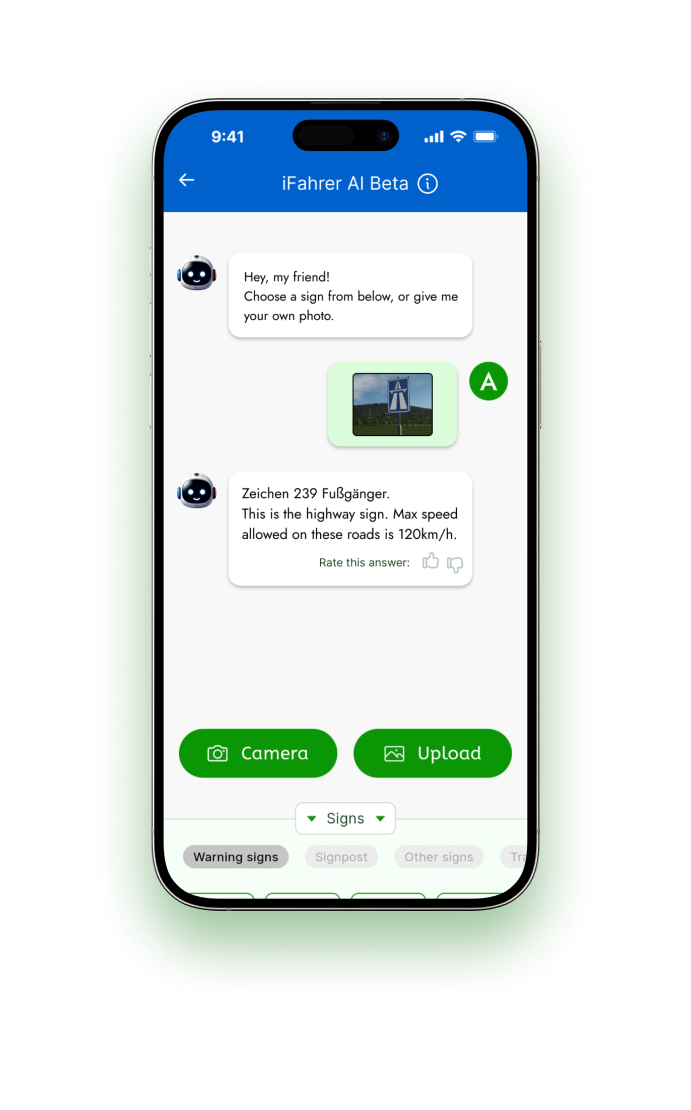
Get ready for your license test with AI assistance!
What should you anticipate while driving, when it starts to rain after a long dry period?
A particularly slippery road surface
Poor visibility through my helmet visor
A shorter braking distance
Here is Our AI Assistant's Explanation
Your answer is correct. When it first rains after a long dry period, oil and dust that have built up on the road mix with the water, making the surface especially slippery. This increases the risk of skidding. Additionally, rain can cause poor visibility, especially if water, dirt, or fogging appears on a helmet visor or windshield. Both of these situations mean you need to drive more cautiously, increase your following distance, and reduce speed. The idea that braking distance would be shorter is incorrect—in fact, it is longer on wet, slippery roads. In similar questions, always remember that the first rain after dryness is particularly dangerous for both grip and visibility.