Get ready for your license test with AI assistance!
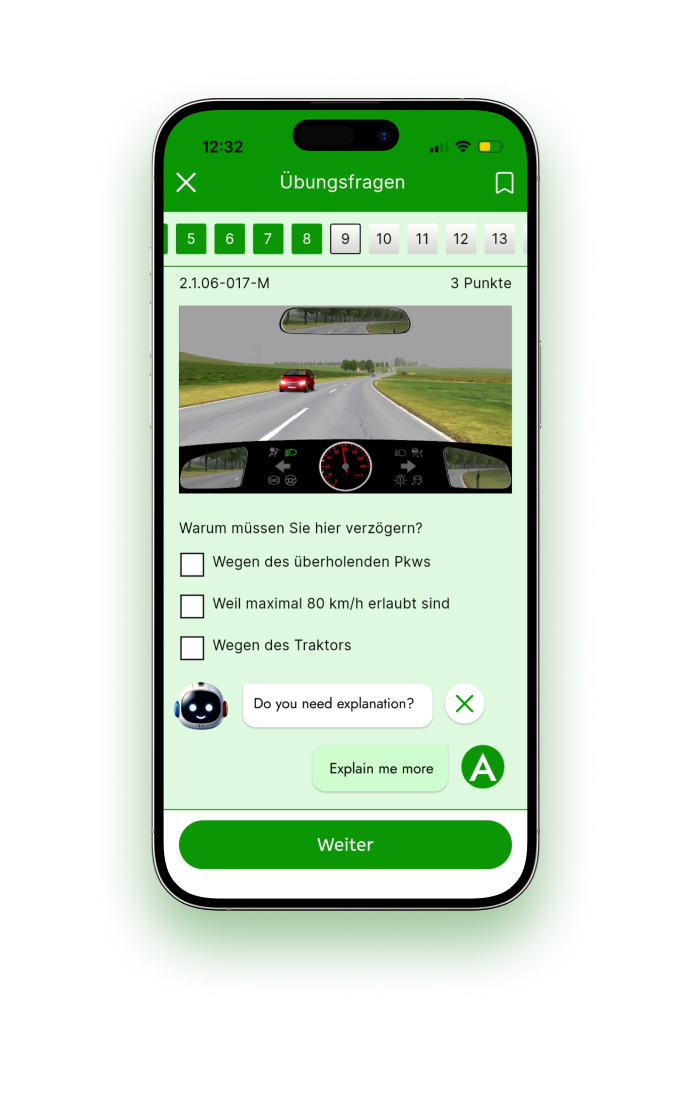
What is the right course of action now?
I slow down to walking speed
I drive over to the right-side as far as possible
I drive on past the pedestrian
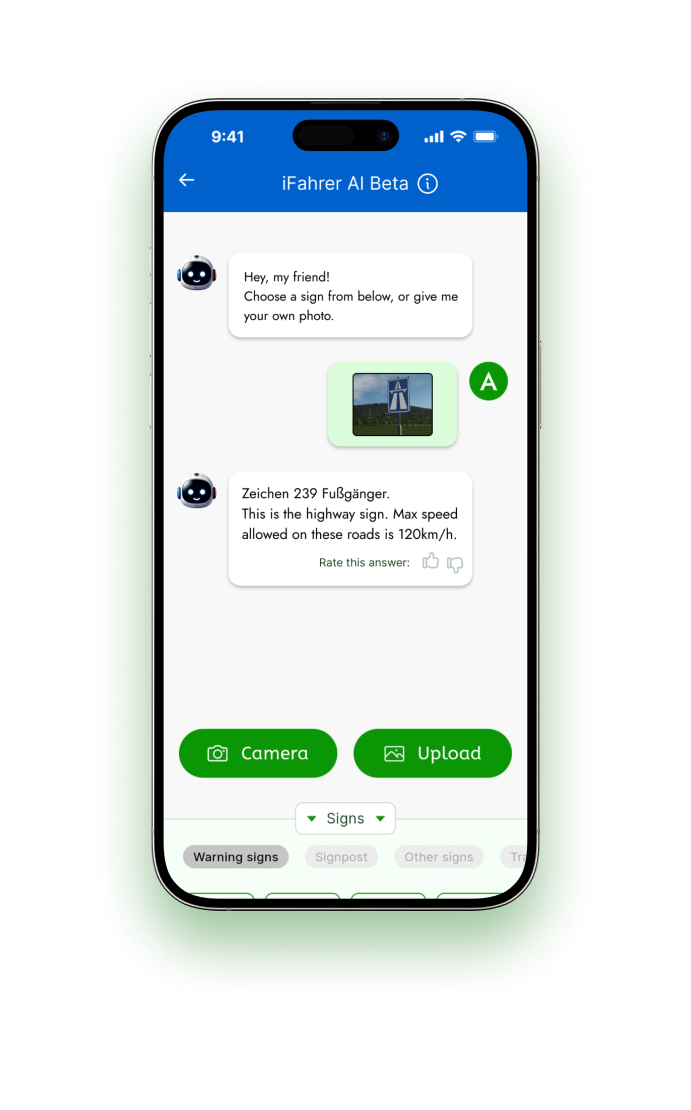
Here is Our AI Assistant's Explanation
Your choices 1 and 2 are correct because a pedestrian on a narrow rural road is a vulnerable road user, and in a bend you often cannot judge early enough whether they might step onto the carriageway, stumble, or be forced outward by the edge of the road.
Slowing down to walking speed is the safe “rule of thumb” when the situation is tight or unclear: you must be able to stop immediately within the distance you can see (“driving on sight”), especially in curves and on narrow roads without a center line. If there is any doubt that you can pass with a clearly safe gap, your speed has to come down to a level where a sudden reaction (braking/steering) won’t endanger the pedestrian.
Moving as far right as possible is also correct because you must keep a sufficiently large lateral distance when overtaking or passing pedestrians. On a narrow road, you create that safety margin mainly by positioning your vehicle away from the pedestrian and passing only when it can be done without forcing them to react. The key is: reduce speed first, then pass with maximum possible clearance.
Driving past the pedestrian without these measures is not acceptable here because “I can probably squeeze by” is not enough in German traffic law; you must avoid endangering or even frightening pedestrians. If the road is too narrow to pass safely, you would be expected to slow to a crawl and be prepared to stop until you can pass safely.