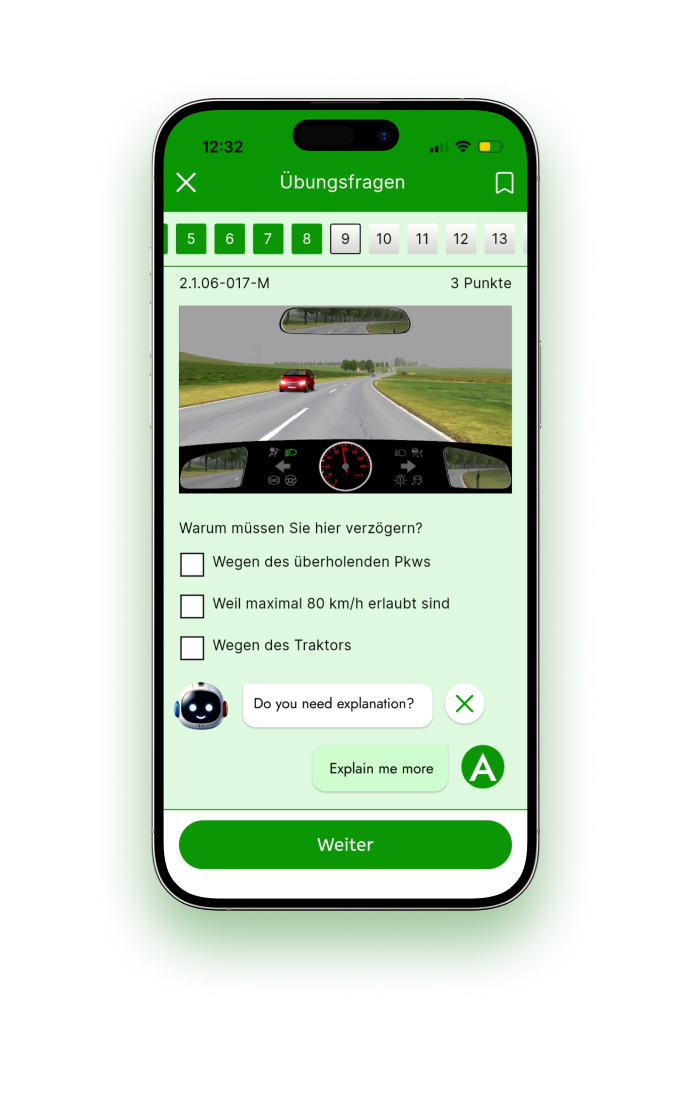
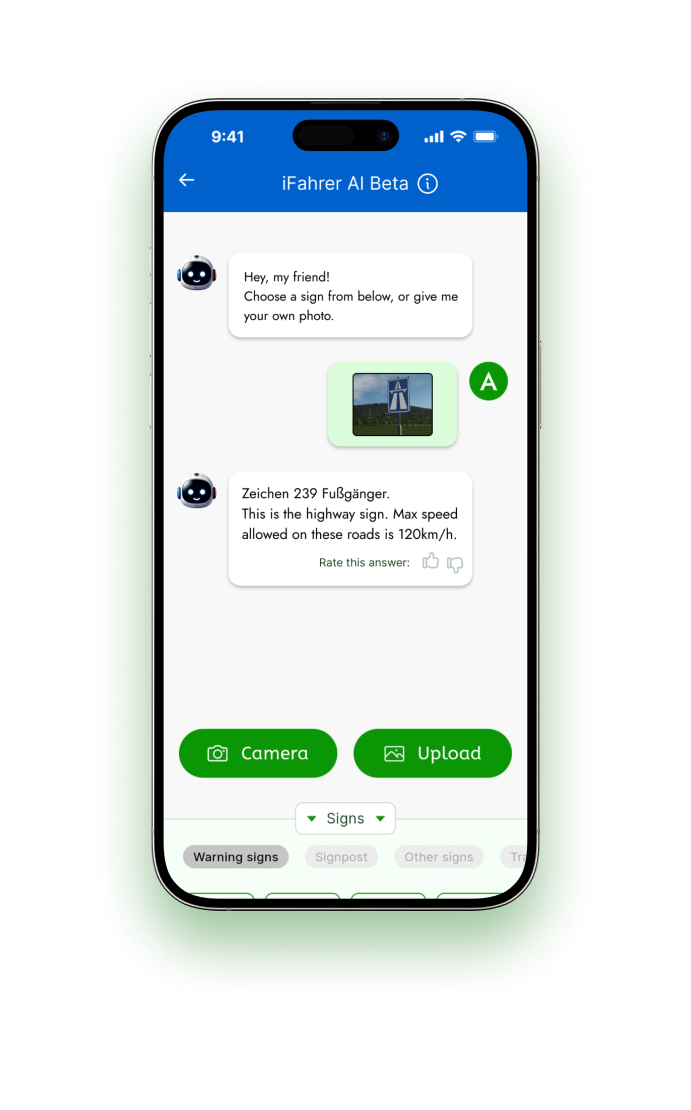
Get ready for your license test with AI assistance!
You are travelling at 100 km/h and have a reaction time of 1 second. What is the reaction distance according to the rule of thumb?
Answer: 30 m
Here is Our AI Assistant's Explanation
Reaction distance is the distance your car travels during the time you need to notice a hazard and start braking. The German rule of thumb for reaction distance assumes about 1 second reaction time and uses: speed (in km/h) divided by 10, then multiplied by 3.
At 100 km/h: 100 ÷ 10 = 10, and 10 × 3 = 30 m. So 30 m is correct.
This matters because reaction distance is only the first part of the total stopping distance. After those 30 m, you still need additional braking distance to actually stop. A useful rule of thumb is: braking distance (normal braking) ≈ (speed ÷ 10)², so at 100 km/h that’s about 100 m. Together, stopping distance is roughly reaction distance + braking distance ≈ 30 m + 100 m = 130 m (in normal conditions).
Rule of thumb to remember: reaction distance ≈ (km/h ÷ 10) × 3, and it increases linearly with speed and also increases if you’re tired, distracted, or conditions reduce your attention.