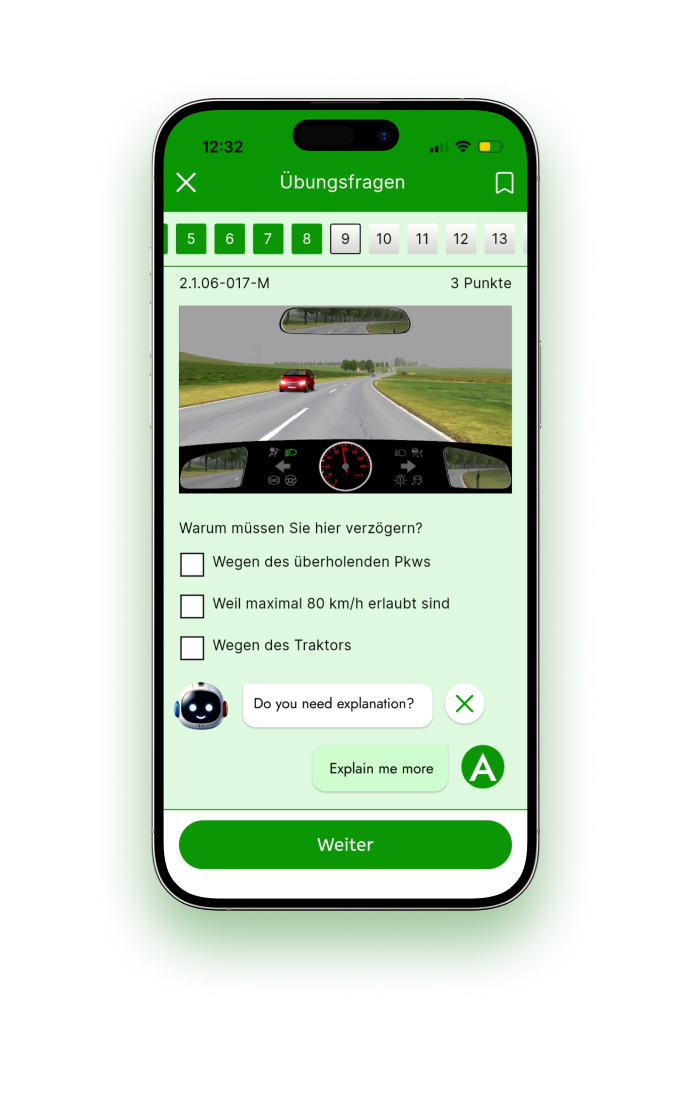
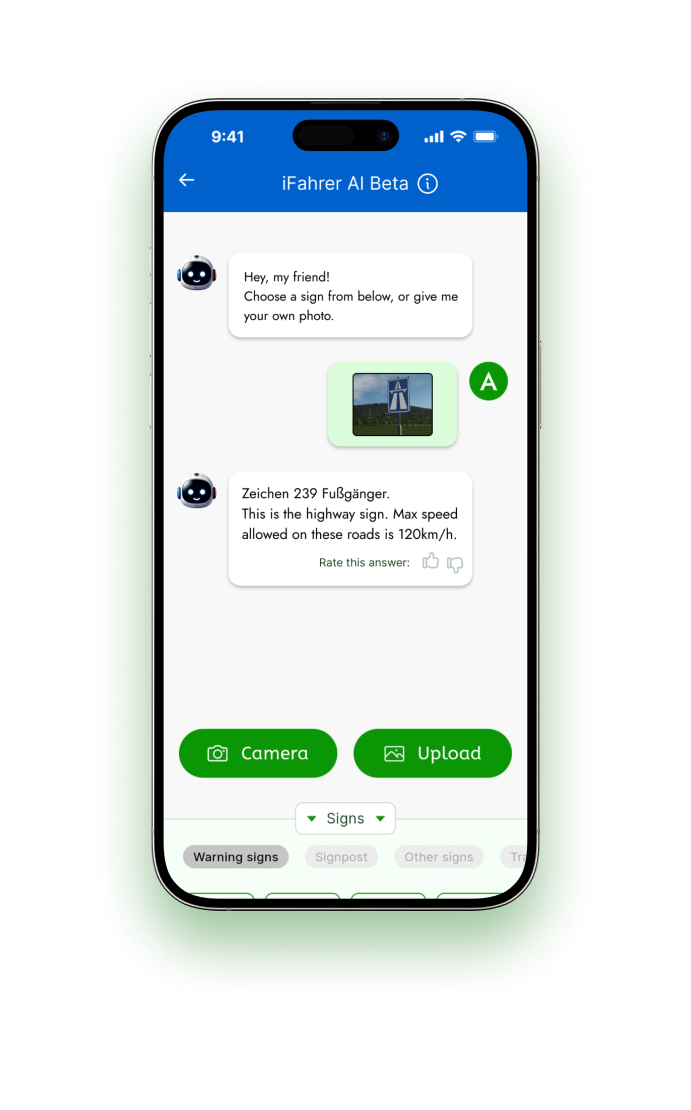
Get ready for your license test with AI assistance!
You want to overtake a truck with a trailer. What must you be aware of when doing so?
The necessary overtaking distance is significantly increased due to the trailer
The external bodywork of the truck-trailer combination may conceal vehicles ahead
You may only pull out to overtake once you are directly behind the truck-trailer combination
Here is Our AI Assistant's Explanation
Answers 1 and 2 are correct because overtaking a truck with a trailer is riskier mainly for two reasons: you need more space and time than you think, and your view is heavily restricted.
Answer 1: A truck-trailer combination is much longer than a solo truck or car. That means you stay on the oncoming lane longer while passing, so you need a noticeably longer clear stretch of road to complete the maneuver safely. Rule of thumb: only start overtaking if you can see far enough ahead to pass the entire combination and return to your lane without forcing anyone to brake or swerve.
Answer 2: The truck and especially the trailer block your view forward. From directly behind it, you often cannot see vehicles or hazards in front of the truck (for example, a slow car, a cyclist, a left-turning vehicle, a traffic jam, or an oncoming vehicle beyond a bend/crest). This “concealment” is why you must be extra cautious: make sure you have a clear view of the road ahead (as much as possible) and that there is genuinely enough free space.
Why answer 3 is not required: You do not have to wait until you are directly behind the truck-trailer combination to pull out. In practice, it can even be safer to keep a sensible following distance first, then move out early enough to gain a view, but only if you can do so without endangering or impeding others (check mirrors, shoulder check, indicators). What matters is: safe distance, good observation, and enough overtaking distance—rather than being “directly behind.”