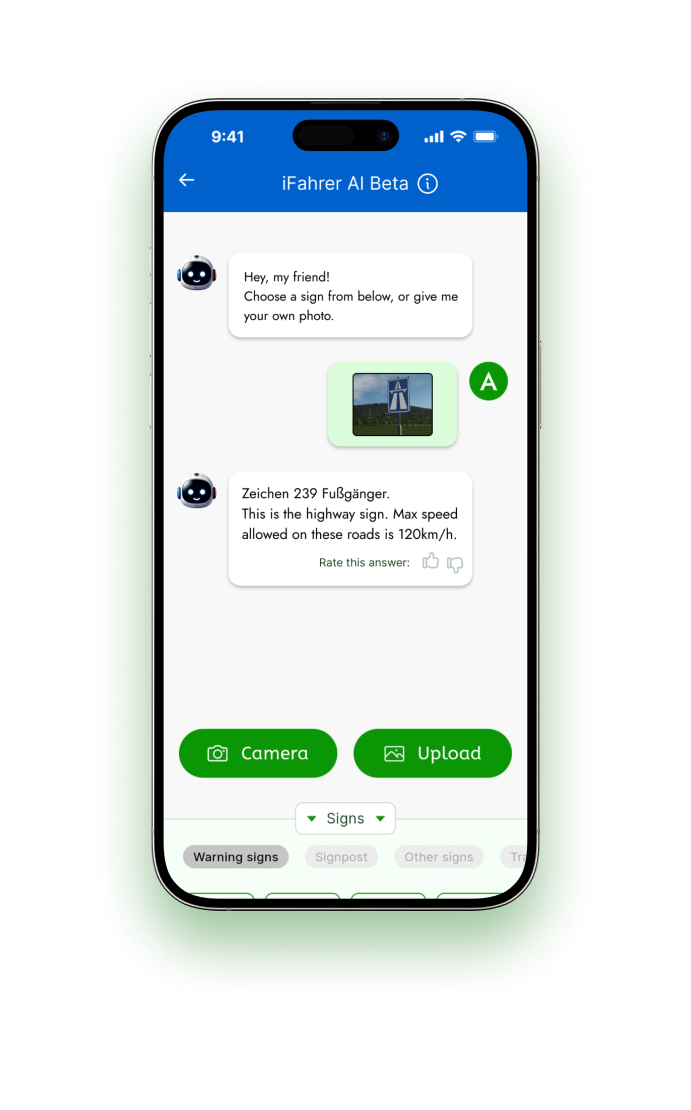
Get ready for your license test with AI assistance!
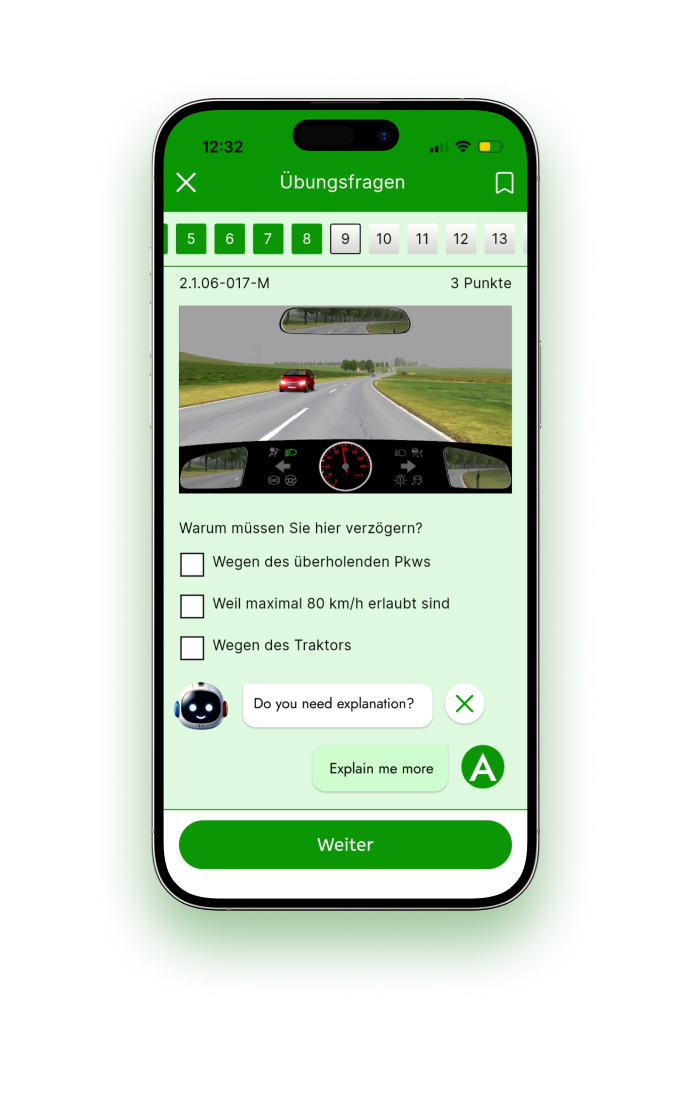
What is the right course of action?
I reduce my speed and stay in the middle lane
I maintain my speed and stay in the middle lane
I maintain my speed and move into the right-hand lane
Here is Our AI Assistant's Explanation
Answer 1 is correct because on the Autobahn you must always adapt your speed and lane choice to the traffic situation ahead, not just keep cruising at the same speed.
In this situation you are in the middle lane with faster traffic potentially coming from behind and slower vehicles (trucks) to the right. If you can see that the flow ahead may slow down (for example because vehicles are closer together or an overtake is ending), the safe and correct reaction is to reduce speed early and keep your lane. That creates a buffer, avoids last-second braking, and prevents you from being pushed into risky lane changes.
Answer 2 is wrong because “maintain speed” ignores that you may be approaching slower traffic or a developing bottleneck. In German theory questions, if there is any sign that you might have to adjust to others, you’re expected to ease off early.
Answer 3 is wrong because moving to the right just to keep speed can be dangerous: it can put you into a lane with slower vehicles and force you into repeated lane changes. Also, on German roads you should only change lanes if it’s necessary and safe, not as a way to avoid adjusting speed.
Rule of thumb: If traffic conditions ahead are uncertain, first stabilize the situation by reducing speed and keeping your lane; only change lanes when it clearly improves safety and you can do it without affecting others.