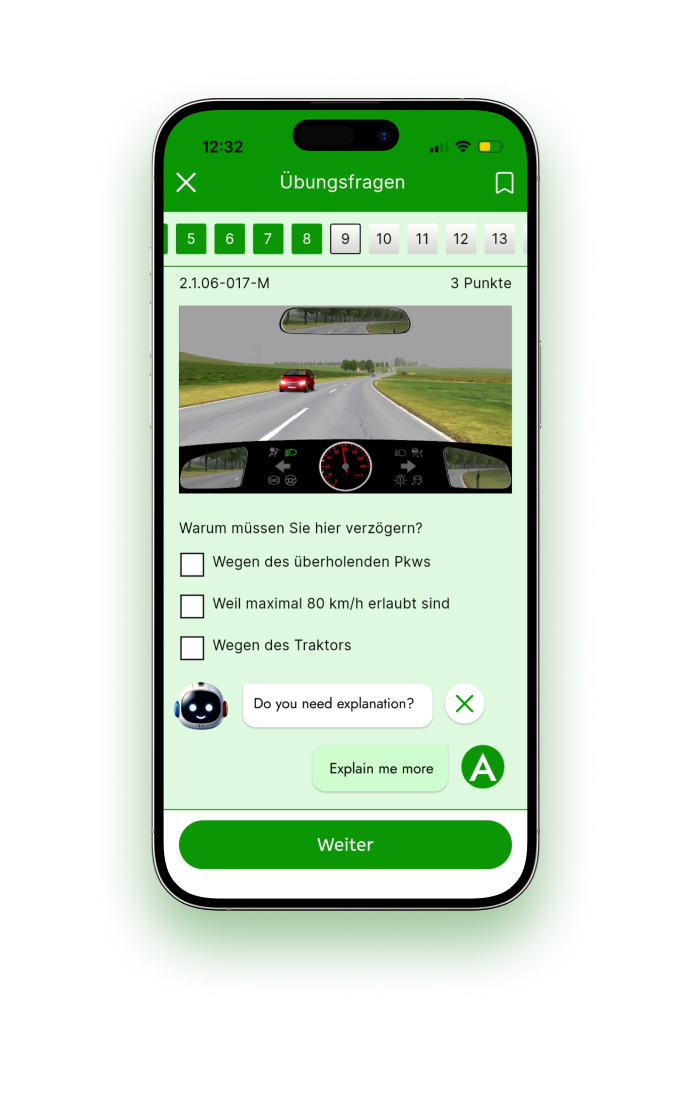
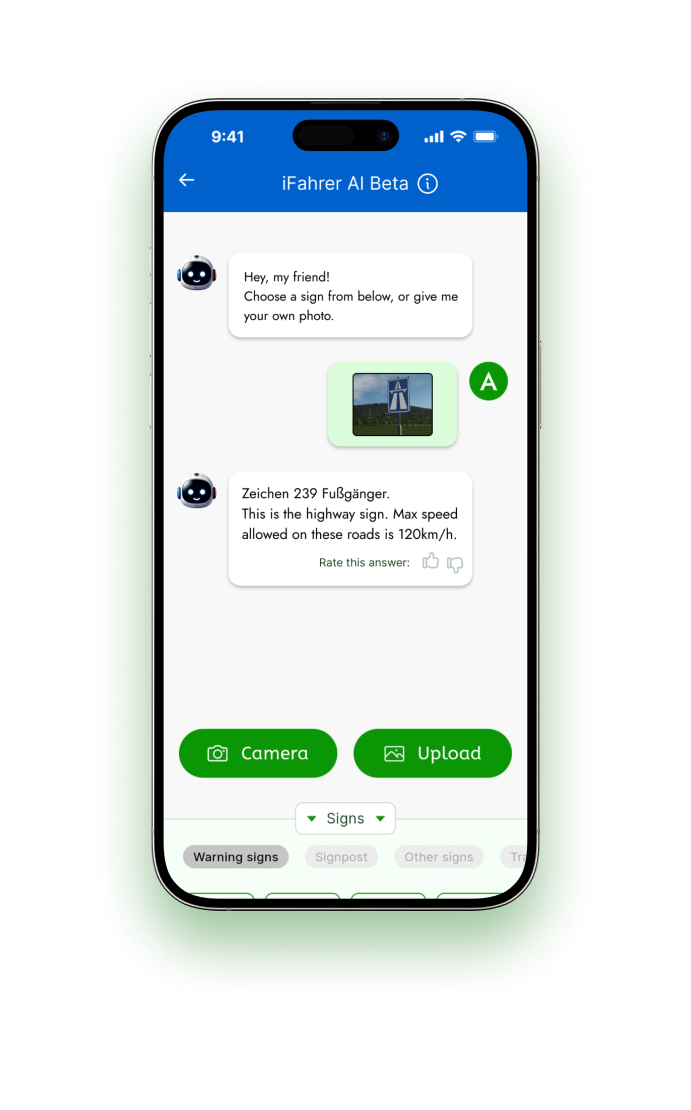
Get ready for your license test with AI assistance!
You want to set off in an automatic car (hydraulic converter). What must you know?
When selecting a gear, the car must, as a rule, be held by the service brakes
The selector lever must only be moved when the engine has stopped
The engine revolutions must be raised considerably so that the engine does not stall
Here is Our AI Assistant's Explanation
In a car with a hydraulic torque converter automatic, the engine and drivetrain are already coupled “softly” as soon as you select a drive gear. That means the car will usually start to creep forward (or backward) at idle as soon as you shift from P or N into D or R. Because of this, you should normally keep the car secured with the foot brake while selecting the gear, and only release the brake when you actually want to move off. This prevents unintended rolling and makes the start controlled and safe.
The other statements are wrong for typical automatics: you do not need to switch the engine off to move the selector lever; you shift with the engine running. And you do not need to raise engine speed to prevent stalling—unlike a manual, an automatic with a torque converter won’t stall just because you didn’t add throttle. The key rule of thumb is: brake held while shifting, then release to move off smoothly.