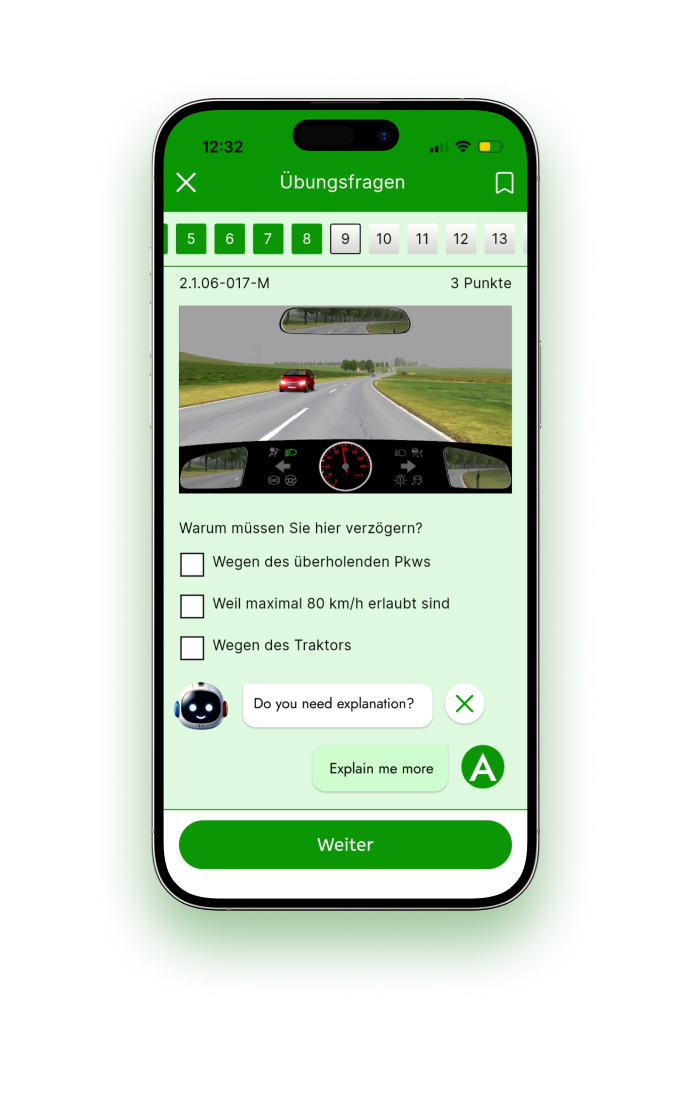
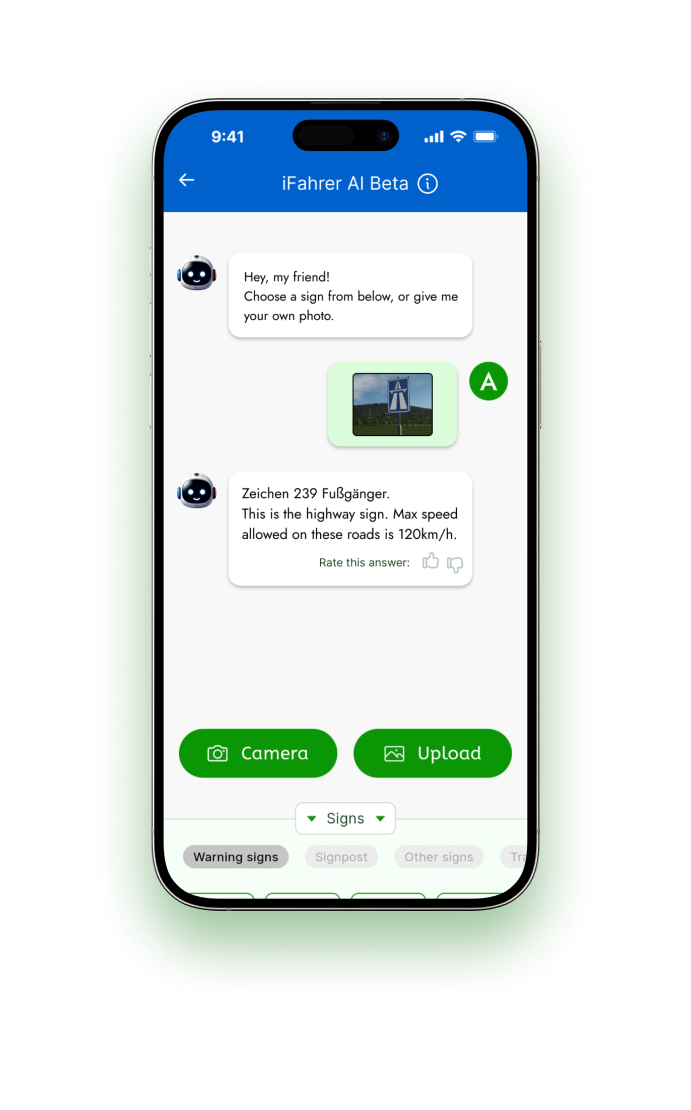
Get ready for your license test with AI assistance!
The brake light of your vehicle is not working. What could be the cause of this?
The relevant fuse is defective
The bulb is defective
The fill level of the brake fluid is too low
Here is Our AI Assistant's Explanation
If your brake light doesn’t work, the most typical causes are electrical or the lamp itself, so answers 1 and 2 are correct.
Answer 1 (defective fuse) fits because the brake lights are protected by a fuse in the vehicle’s electrical circuit. If that fuse blows, the circuit is interrupted and the brake light(s) won’t illuminate even though you press the brake pedal.
Answer 2 (defective bulb) fits because a burned-out bulb is a very common single-light failure. Depending on the vehicle, one bulb can fail while the other brake light still works, or multiple lights can be affected if they share a housing or connector.
Answer 3 (brake fluid too low) is not a direct cause of a brake light failure. Low brake fluid can trigger a warning light on the dashboard and indicates a safety-critical brake system issue, but it doesn’t “switch off” the brake lamps. Brake lights are controlled by the brake light switch at the pedal and the electrical circuit (switch, fuse, wiring, bulbs, connectors).
Rule of thumb for similar questions: If a light doesn’t work, think “bulb or power supply” first (bulb, fuse, wiring/connector, switch). Fluid levels belong to the hydraulic braking function and warning indicators, not to the external brake light circuit.