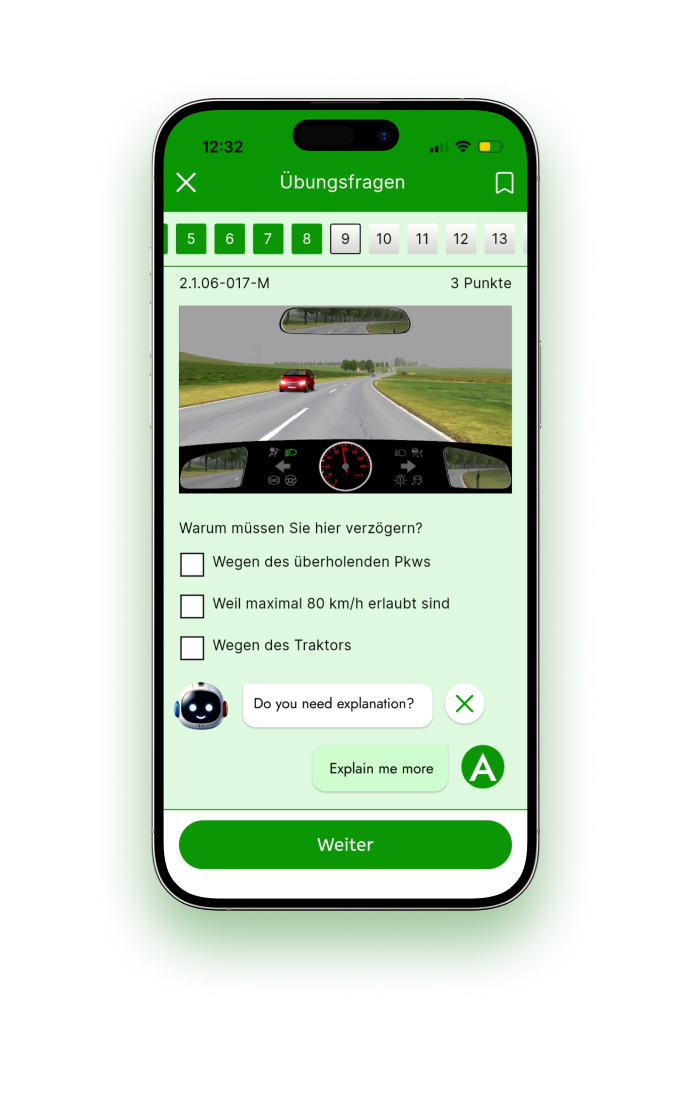
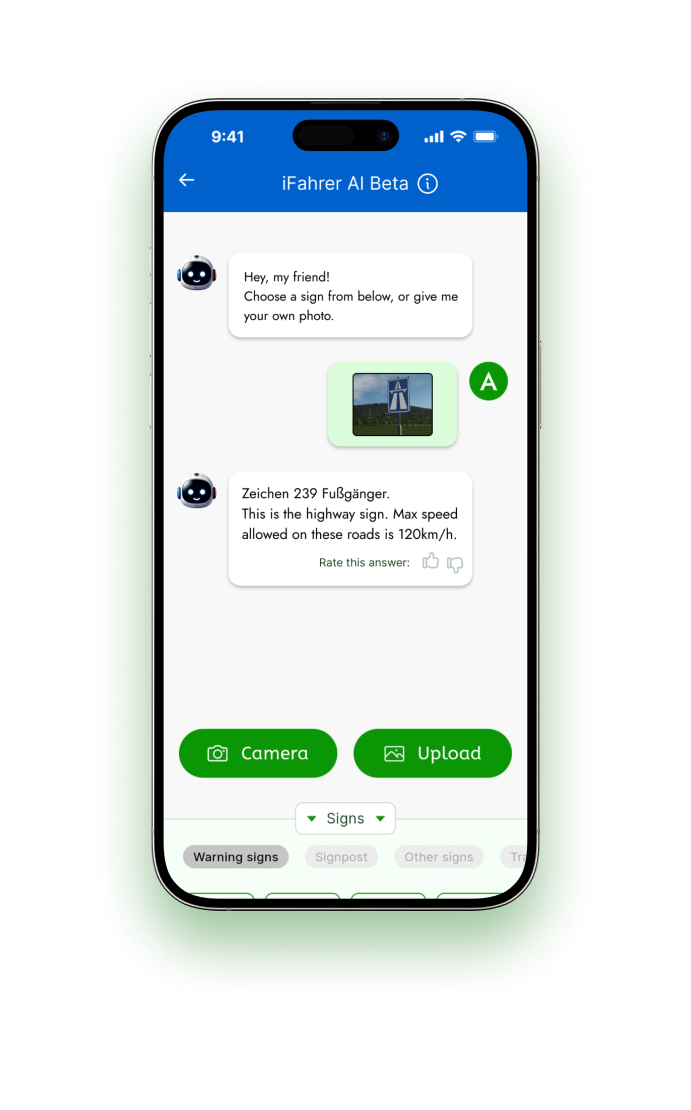
Get ready for your license test with AI assistance!
One of your wheels has collided heavily against a kerb. What should you note?
The vehicle should be checked in a garage
The handling of the vehicle could be negatively affected
The tyre could have a slow puncture
Here is Our AI Assistant's Explanation
After a heavy impact with a kerb, you should assume hidden damage is possible even if the car still seems to drive normally.
Answer 1 is correct because the hit can bend or crack parts you can’t reliably assess yourself, such as the rim, suspension components (control arm, tie rod), steering parts, or even the wheel bearing. A garage can check wheel alignment, suspension play, rim damage, and whether the tyre is still safe.
Answer 2 is correct because a bent rim or shifted wheel alignment can immediately or gradually worsen the car’s driving behaviour. Typical signs are the car pulling to one side, the steering wheel no longer being straight when driving straight, vibrations, unstable cornering, or longer braking distances because the tyre contact patch is no longer optimal. Even small misalignment increases tyre wear and reduces stability, especially at higher speeds.
Answer 3 is correct because the tyre sidewall is particularly sensitive. The impact can damage the carcass or bead area, causing a slow loss of pressure, or create a “bulge” that can later lead to a blowout. The risk is higher if you hit the kerb hard or at speed. Rule of thumb: check tyre pressure soon after, look for cuts/bulges, and if anything seems off (pressure drop, vibration, pulling), stop driving and have it inspected.